
Choosing between Topstep and Take Profit Trader depends on your trading style, budget, and goals. Here’s the key takeaway:
- Topstep offers lower monthly fees, structured evaluations, and strong community support, making it ideal for traders seeking mentorship and discipline-building.
- Take Profit Trader focuses on simplicity, faster payouts, and flexible rules, appealing to experienced traders who want a straightforward process.
Quick Overview:
- Topstep: $49–$199/month (Standard path), up to $750,000 combined across five Express Funded Accounts, strong community, and coaching.
- Take Profit Trader: $150–$360/month, up to five funded accounts, PRO withdrawals from day one once the buffer zone is reached, and a 3-day minimum in the Test.
| Feature | Topstep | Take Profit Trader |
|---|---|---|
| Monthly Fee (50k, checked on 10 Oct 2026) | $49 | $170 |
| Max Account Size | $150,000 per account; up to five Express Funded Accounts ($750,000 combined, simulated) | $150,000 per account; up to five PRO or PRO+ accounts at once |
| Payout Rules | 90/10 (100% of first $10,000 only for traders who joined before Jan 12, 2026); XFA payouts after 5 winning days of $150+ | PRO 80/20; withdrawals from day one once the balance is above the buffer zone; 3-day minimum in the Test |
| Evaluation | Structured, strict risk limits | Simple, flexible |
| Community Support | Active Discord, live coaching | Limited |
Both firms have strengths and weaknesses, so your decision should match your trading style and priorities.
Company Profiles
Getting to know the background and approach of each company is key to deciding which platform best suits your trading objectives.
Topstep Profile
Topstep has been a fixture in the futures prop trading industry for about 15 years, building a reputation as a trusted name in the field. The company focuses exclusively on futures trading, working with regulated brokers and CME-approved data providers to ensure reliability in a market where trust is essential.
Topstep offers Trading Combine accounts in sizes of $50,000, $100,000, and $150,000, with a maximum individual Express Funded Account capped at $150,000. What sets Topstep apart is its unique scaling feature: traders can manage up to five active Express Funded Accounts at the same time, giving them access to a combined buying power of up to $750,000 during the simulated trading phase.
This multi-account setup provides experienced traders with significant capital to work with. However, when a trader is called up to a Live Funded Account, all Express Funded Accounts close, only one Live Funded Account can be active, and its size (up to $150,000) is set by averaging the trader's eligible XFA tiers, with 20% tradable at the start and 80% held in reserve.
Take Profit Trader Profile
Take Profit Trader offers Test accounts from $25,000 to $150,000, and each funded account is capped at $150,000.
What makes Take Profit Trader stand out is its broad range of tradable futures instruments. These include major index futures like ES (E-mini S&P 500) and NQ (E-mini Nasdaq-100), energy contracts such as CL (Crude Oil) and NG (Natural Gas), precious metals like GC (Gold) and SI (Silver), as well as forex, agricultural products, treasury futures, and Micro E-mini contracts like MES and MNQ - all available across CME Group exchanges. This variety offers flexibility for traders with differing strategies and risk preferences.
Like Topstep, Take Profit Trader lets traders run several funded accounts: up to five PRO/PRO+ accounts at once (Test accounts are unlimited), each capped at $150,000.
These contrasting profiles provide a foundation for exploring their evaluation methods and trading rules in greater detail.
Evaluation Requirements and Trading Rules
After exploring the firm profiles, let’s examine how each prop firm evaluates traders. Understanding their evaluation processes can help you align with the one that fits your trading style and risk tolerance best. Before you buy either evaluation, check current prop firm discounts.
Uptime
99.999% uptime. Built for 24/7 trading reliability.
Your VPS runs in Tier IV datacenters with redundant power and network, monitored 24/7 on site.
See the uptime SLA







From $29.99/mo · Windows or Linux
Evaluation Process Comparison
Each firm takes a unique approach for evaluating traders, with differences in focus and flexibility.
Topstep's Trading Combine is built around consistency and strict risk management. To pass, traders must hit a profit target while adhering to a firm Maximum Loss Limit. This setup emphasizes disciplined trading and rewards traders who demonstrate steady performance.
Take Profit Trader, on the other hand, offers a more straightforward path to securing funding. With rules that are described as trader-friendly, it provides flexibility, catering to a variety of trading approaches.
Trading Rule Metrics
| Topstep | Take Profit Trader |
|---|---|
| Single-step Trading Combine | Single-step evaluation |
| Strict Maximum Loss Limit enforced | Greater flexibility with risk management |
These metrics highlight the contrasting philosophies of both firms - Topstep leans toward structured risk control, while Take Profit Trader prioritizes adaptability. This balance of risk and flexibility sets the stage for further examination of their differences.
Pricing and Payout Structure
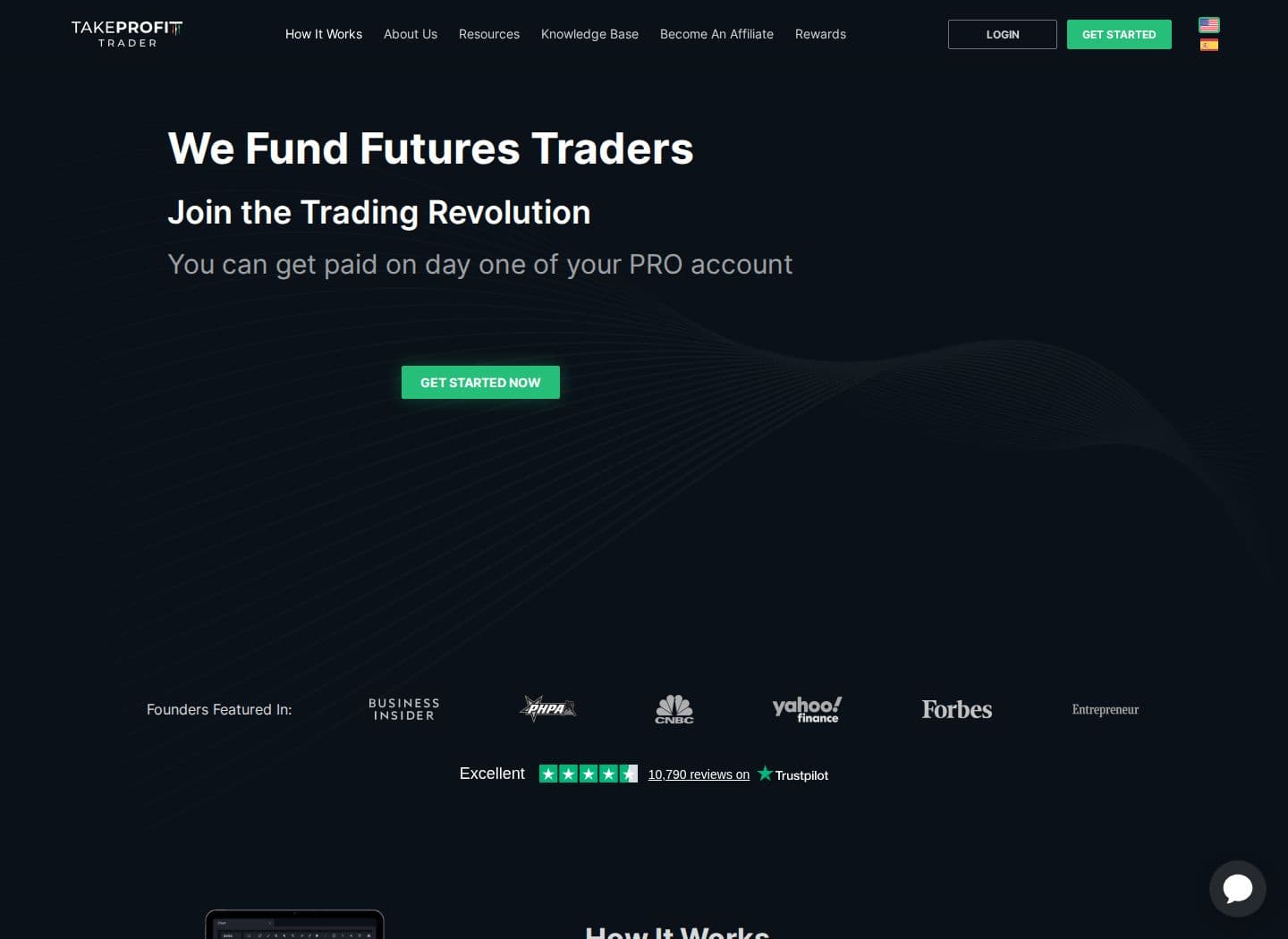
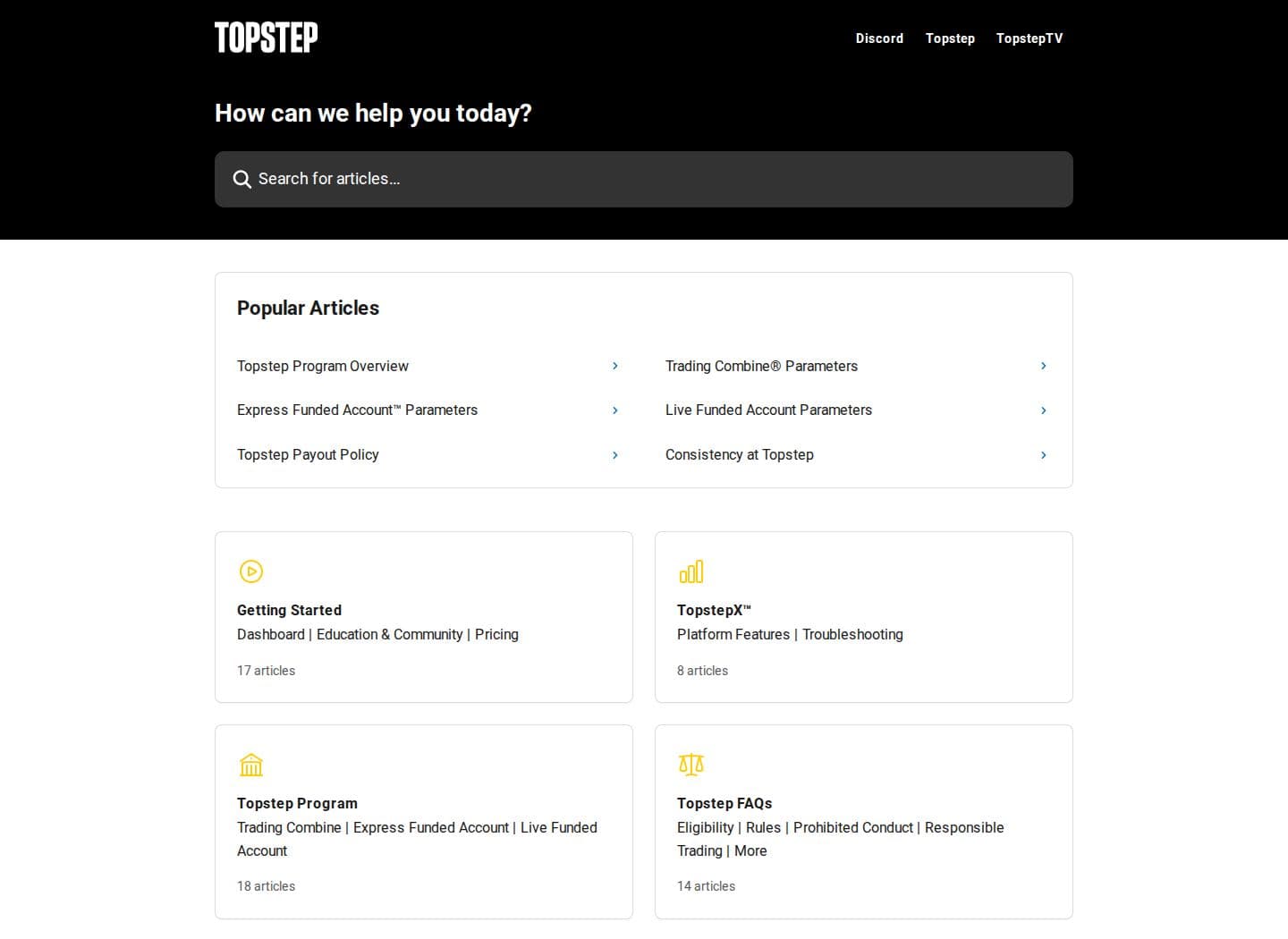
When considering prop firms, it's important to look beyond just the monthly fees. Both Topstep and Take Profit Trader have pricing structures that can significantly influence your overall costs. The figures below come from Topstep's Pricing and Payment Questions page on help.topstep.com and Take Profit Trader's help center and homepage, checked on 10 Oct 2026.
Fee Comparison
Monthly evaluation fees highlight a noticeable difference between Topstep and Take Profit Trader. For instance, a $50,000 account costs $49 per month with Topstep, while Take Profit Trader charges $170 per month for the same account size. The disparity becomes even more pronounced with larger accounts. A $150,000 evaluation costs $199 monthly with Topstep (Standard path), compared to $360 with Take Profit Trader.
| Account Size (checked on 10 Oct 2026) | Topstep Standard path | Topstep No Activation Fee path | Take Profit Trader Test |
|---|---|---|---|
| $25,000 | Not offered | Not offered | $150/month |
| $50,000 | $49/month | $95/month | $170/month |
| $75,000 | Not offered | Not offered | $245/month |
| $100,000 | $99/month | $149/month | $330/month |
| $150,000 | $199/month | $229/month | $360/month |
| Fee when you pass | $149 per Express Funded Account | $0 | $130 one-time PRO activation fee |
Beyond monthly fees, activation fees also play a role. On the Standard path Topstep charges a one-time $149 activation fee per Express Funded Account; the No Activation Fee path costs more per month ($95/$149/$229) but has no activation fee. Take Profit Trader, on the other hand, charges a $130 activation fee for a PRO account, but traders can use the "NOFEE40" code to get a 40% lifetime discount, potentially waiving this fee.
Reset fees are another factor to consider. Topstep resets cost $49, $99 or $199 on the Standard path ($95, $149 or $229 on the No Activation Fee path), and every monthly rebill adds one Reset Credit to your Reset Bank. Take Profit Trader lists Test resets at $79 (25K), $99 (50K), $139 (75K), $169 (100K) and $199 (150K); PRO accounts can be reset up to three times at $449 to $1,499 depending on size.
Data fees also differ between the two firms. Topstep provides Level 1 market data at no extra cost in the Trading Combine and Express Funded Account, while Level 2 data costs $38 per month. In the Live Funded Account, professional exchange data costs $133 per month per exchange, and Topstep covers one exchange (CME by default) for all Live Funded traders.
Take Profit Trader, meanwhile, offers two data feeds: CQG and Rithmic. CQG serves NinjaTrader, Tradovate and TradingView. Rithmic serves platforms such as R|Trader, Quantower, ATAS and Bookmap.
Profit Splits and Withdrawal Terms
Both firms operate funded account models where traders keep a portion of their profits. Take Profit Trader's promotional offers, like the "NOFEE40" lifetime discount and waived activation fees, make it appealing for cost-conscious traders. However, its higher monthly evaluation fees could outweigh these perks for those who need more time to pass the evaluation.
On the other hand, Topstep's lower monthly fees may be a better fit for traders who require longer evaluation periods or multiple attempts. The Reset Bank adds extra value, with one Reset Credit added at each monthly rebill. Topstep also covers one exchange's data fee (CME by default) for Live Funded traders, which saves $133 a month.
Support Services and Platform Options
For succeeding with a proprietary trading firm, the quality of support services and platform compatibility can make all the difference. Both Topstep and Take Profit Trader take distinct approaches to trader support and offer platform options for different trading styles.
Customer Support and Training
Topstep has built a strong educational framework, supported by an active community and live coaching sessions. Topstep's homepage puts its Discord community at 174,000 members, where traders share experiences and learn from one another.
TopstepTV™ streams live market coverage and trade analysis. Topstep's Trading Combine program focuses on helping traders develop discipline and healthy trading habits, emphasizing growth over simply chasing profits.
"Topstep Traders develop stronger skills, healthier habits, and have unmatched community support."
Take Profit Trader, on the other hand, provides free educational materials and straightforward trading guidelines aimed at fostering consistent performance. The firm also organizes trading contests designed to enhance engagement and performance. However, it does not offer free trials, which may make it harder for potential users to evaluate the platform before making a financial commitment.
Platforms are the other big difference. New Topstep accounts trade on TopstepX only; Topstep's help center says "TopstepX™ is the only available trading platform." Take Profit Trader lets you pick a CQG or Rithmic data feed and connect any of 15+ platforms, including NinjaTrader, Tradovate and TradingView.
Trading Platforms and VPS Integration
A Virtual Private Server (VPS) hosts your trading software on a remote machine, so it keeps running when your home internet or computer goes down.
QuantVPS plans run on NVMe storage and support platforms like NinjaTrader, MetaTrader, and TradeStation. The Chicago VPS location sits 0.52ms from CME, so your platform stays responsive and connected, even during local internet outages.
Investing in a professional VPS service benefits traders across all prop firms by reducing the risk of technical issues that could lead to missed opportunities or rule violations. Lower latency to the exchange and steady uptime often make the cost of a VPS worthwhile.
Order flow
Built for scalpers. Heatmaps on dedicated resources.
Order-flow heatmaps and DOM ladders run on dedicated CPU, memory and NVMe, so your charts keep responding during volatility.
See the dedicated hardwareFrom $29.99/mo · Windows or Linux
Advantages and Disadvantages
After diving into the evaluation and support structures, let’s break down the advantages and disadvantages of these two prop trading firms. The table below highlights their strengths and weaknesses, helping you decide which aligns with your trading goals.
| Aspect | Topstep Advantages | Topstep Disadvantages | Take Profit Trader Advantages | Take Profit Trader Disadvantages |
|---|---|---|---|---|
| Community & Education | Active Discord community with daily coaching sessions | Premium features come with higher costs | Clear and concise educational materials | Minimal community interaction and engagement |
| Platform Performance | Well-established evaluation process on TopstepX, one platform for every new account | New accounts can only use TopstepX | Choice of 15+ platforms on CQG or Rithmic data | No trial period offered |
| Support Structure | Includes live coaching and group mentoring | Abundance of resources may overwhelm some traders | Straightforward and easy-to-follow guidelines | Limited support and mentorship options |
| Funding Process | Organized and structured evaluation system | Longer evaluation timeline for funding | Quick and efficient performance-based assessment | Fewer funding options available |
| Cost Structure | Lower monthly fees ($49 for 50K on the Standard path) | $149 activation fee per funded account on the Standard path | One-time $130 PRO activation fee, waived with the NOFEE40 code | Higher monthly Test fees ($170 for 50K) |
Topstep focuses heavily on creating a well-rounded trading experience. With its active community, live coaching, and structured evaluation process, it’s ideal for traders who value mentorship and skill-building. It also has the lower monthly fees, though the amount of material can feel like a lot for traders who just want to trade.
On the other hand, Take Profit Trader offers a more direct, no-frills approach. Its one-step Test and day-one PRO withdrawals suit traders who want a quick path to payouts, but its monthly Test fees are higher than Topstep’s. Its limited community features and less support may also leave traders seeking mentorship and deeper engagement wanting more.
Running either firm’s platform on a VPS keeps it online through local outages and lowers latency to the exchange.
Best Fit by Trading Style
When deciding on the right proprietary trading firm, your trading style matters. This choice impacts everything - from evaluation processes to platform features and the kind of support you'll receive.
For beginners, a simple and straightforward evaluation process is ideal. It allows for a quicker transition to live trading without overwhelming complexity. On the other hand, traders who are looking for mentorship will benefit from firms that offer structured programs with plenty of resources to aid learning.
Scalpers and high-frequency traders should prioritize low latency and dependable connectivity. Look for streamlined rules and platforms that can handle the demands of rapid trading.
For swing traders, it's essential to find evaluations that align with longer-term strategies. Firms with relaxed daily requirements and detailed performance tracking are better suited for this style.
Part-time traders - those with limited daily availability - should seek firms offering flexible evaluations that fit into their schedules without adding unnecessary pressure.
If you're aiming for rapid scaling, you'll need to strike a balance. Look for firms with quick evaluation processes but ensure they provide thorough assessments to help you manage larger accounts effectively.
For automated traders, check each firm’s automation rules before you buy. Take Profit Trader’s PRO Account Rules say: "We do not allow any automated or bot trading of any kind."
Conservative traders often benefit from firms that emphasize structured support and risk management protocols. Meanwhile, risk-takers may lean toward firms with minimal oversight, allowing for faster funding and greater freedom.
Lastly, consider your budget and learning preferences. If you’re independent and prefer to keep costs low, opt for streamlined evaluations. But if you value mentorship and community support, look for firms that provide coaching and collaborative environments.
Matching your trading style with the right firm features is a key step in setting yourself up for success in the U.S. futures market. If you are also weighing Apex, our Apex versus Take Profit Trader comparison covers rules, accounts and payouts side by side.
Final Recommendations for U.S. Futures Traders
After reviewing the comparison, here are some recommendations for U.S. futures traders.
Topstep and Take Profit Trader cater to different trading approaches. Topstep offers structured mentorship programs, detailed performance analytics, lower monthly fees and one platform, TopstepX, for every new account, making it a solid choice for traders who value guidance and comprehensive tools. Many new traders are drawn to Topstep's strong support system and established reputation.
On the other hand, Take Profit Trader is ideal for experienced discretionary scalpers, thanks to its one-step Test, day-one PRO withdrawals and wide platform choice, though its monthly Test fees are higher.
If you're focused on automated strategies, check each firm's rules first: Take Profit Trader does not allow automated or bot trading, and new Topstep accounts trade on TopstepX only. A server such as a VPS for TradingView webhooks can keep a webhook receiver online, but it cannot make one copier work with both firms' different platform connections.
Your budget will also play a role in choosing the right platform. Higher upfront investments often come with advanced tools, while lower-cost options help minimize initial risk - something to consider depending on your risk tolerance and trading experience.
Lastly, work with firms that publish their rules and fees clearly, so you know your full cost before you start.
These insights should help you align your trading style, experience, and goals with the platform that best suits your needs.
FAQs
How do Topstep and Take Profit Trader differ in their evaluation processes, and what does that mean for traders seeking funding?
Take Profit Trader uses a single-step Test that can be passed in as few as 3 trading days, as long as the best day is below 50% of total profit. Once in a PRO account, traders can withdraw from day one after their balance clears the buffer zone (equal to the max drawdown).
Topstep also uses a single-step evaluation (the Trading Combine), which can be passed in as few as two days if the best day stays below 55% of the profit target. These requirements can make the path to funding and withdrawals take longer, adding an extra layer of structure to the process.
For traders, this means Take Profit Trader provides a faster and more straightforward route to funding. Meanwhile, Topstep’s method might appeal to those who value a more traditional and methodical evaluation process.
How do the monthly fees and extra costs of Topstep and Take Profit Trader impact their value and suitability for different types of traders?
Topstep’s pricing begins at $49 per month for their basic plan. Beyond this, traders should account for additional costs such as data subscriptions, commissions, and platform licenses. Topstep covers one exchange’s data fee (CME by default) for Live Funded traders, which helps cut down on expenses. However, fees for other exchanges may still apply. This straightforward pricing approach makes it easier for traders to calculate their total costs.
Take Profit Trader also publishes its fees: a monthly Test subscription, Test resets from $79 to $199, a one-time $130 PRO activation fee, and a $50 fee on wallet withdrawals of $250 or less. For traders with smaller accounts or lower trading activity, Topstep’s transparent pricing and CME data fee coverage could make it a more budget-friendly option. Ultimately, the suitability of these costs will depend on your trading habits and frequency.
How important are community support and mentorship when deciding between Topstep and Take Profit Trader for skill development?
Community support and mentorship are key for traders aiming to sharpen their skills and build confidence. Topstep excels in creating a supportive environment for traders, offering forums, free coaching sessions, and various resources to encourage connection, learning, and growth. This collaborative approach makes it a great option for those who value mentorship and peer interaction.
On the other hand, Take Profit Trader provides less emphasis on mentorship. However, the growing focus in 2026 on programs with strong community involvement and support systems shows how these elements can significantly enhance a trader’s progress and success. For traders who prioritize guidance and skill development, these aspects should play a major role in choosing the right platform.


