
A TradeLocker trade copier copies trades between TradeLocker accounts and other platforms, most often MetaTrader 5 (MT5). TradeLocker does not run MT5 Expert Advisors, so there is no copier EA to install inside it. You either use a cloud copier that connects to both accounts, such as Copygram or MetaCopier, or a local copier that reads MT5 and places orders through the TradeLocker Public API.
Two Ways to Copy Trades to TradeLocker:
- Cloud copier: Connects your MT5 and TradeLocker accounts from a web dashboard and copies trades on its own servers. Nothing to install, and you pay a monthly fee.
- Local copier: Runs on your PC or a forex VPS next to MT5 and sends each trade to TradeLocker through its API. It only copies while that computer is on.
For other platforms, compare the best trade copiers and DXtrade copiers.
Keep your trade copier running while you're away.






Setup Requirements
Hardware and Software Needs
Every TradeLocker copier needs a source account, a TradeLocker receiver account and the login details for both. A local copier also needs a Windows PC or VPS that keeps MT5 open all day.
| Cloud copier | Local copier | |
|---|---|---|
| Where it runs | The copier company's servers | Your PC or VPS, next to MT5 |
| What you install | Nothing: you connect accounts in a web dashboard | MT5 and the copier software |
| How it reaches TradeLocker | Logs in with your TradeLocker account details | TradeLocker Public API (REST, with a login token) |
| Copies when your PC is off | Yes | Only when it runs on a VPS |
| Your own MT5 EA | Still needs MT5 running somewhere | Runs on the same machine as the copier |
Not every copier supports TradeLocker, so check the platform list before you pay. These two list TradeLocker on their own sites (checked on 10 Oct 2026):
| Copier | TradeLocker support | Price (checked on 10 Oct 2026) |
|---|---|---|
| Copygram | MT4 or MT5 to TradeLocker, and TradeLocker to MT4 or MT5 | Starter $29 a month for up to 2 trading accounts, Pro $49 for 3, Advanced $79 for 5 (monthly billing) |
| MetaCopier | Copies between MetaTrader, TradeLocker, cTrader, DXtrade and other platforms | Basic USD 0.27 per account per day (about $8.10 a month), Pro USD 0.37 (about $11.10) |
Duplikium is one copier that does not: its help center says "For now TradeLocker is not supported."
For a local copier, QuantVPS hosts MT5 and the copier on a Windows VPS that stays on around the clock.
On a Mac, a cloud copier works from the browser, and a local copier can run on a Windows VPS that you open with Remote Desktop.
Once your copier choice and accounts are ready, the next step is configuring your trading accounts.
Setting Up Trading Accounts
Follow these steps to set up your trading accounts:
-
Install MT5 Platforms: For a local copier, create a separate folder for each MT5 instance, such as
C:\Program Files\MT5-Account1. - Connect to Brokers: Choose the appropriate demo or live servers for your accounts.
- Note Your TradeLocker Server: TradeLocker asks for your email, password and server name at login, and copiers ask for the same details.
- Secure Credentials: Store your login details in a secure location.
For a local copier, put the VPS close to your brokers' servers to reduce latency. Many forex brokers run their servers in London or New York, so a London VPS or New York VPS keeps that distance short.
Required Software Components
What you install depends on where the copier runs:
- Cloud copier: A browser and an account with the copier. Copygram connects to MT5 without a copier EA, but any EA that places your trades still needs MT5 running.
- Local copier: MT5, copier software that supports the TradeLocker API, and your TradeLocker login details.
- Several accounts from one IP address: TradeLocker's API documentation asks developers whose tools trade for multiple accounts from the same IP address to join its Developer Program, which gives a developer key with less restrictive rate limits.
- Performance Tips: On multi-core VPS setups, give MetaTrader terminal processes their own CPU cores to keep them stable.
Integration Steps
Connecting MT5 and TradeLocker
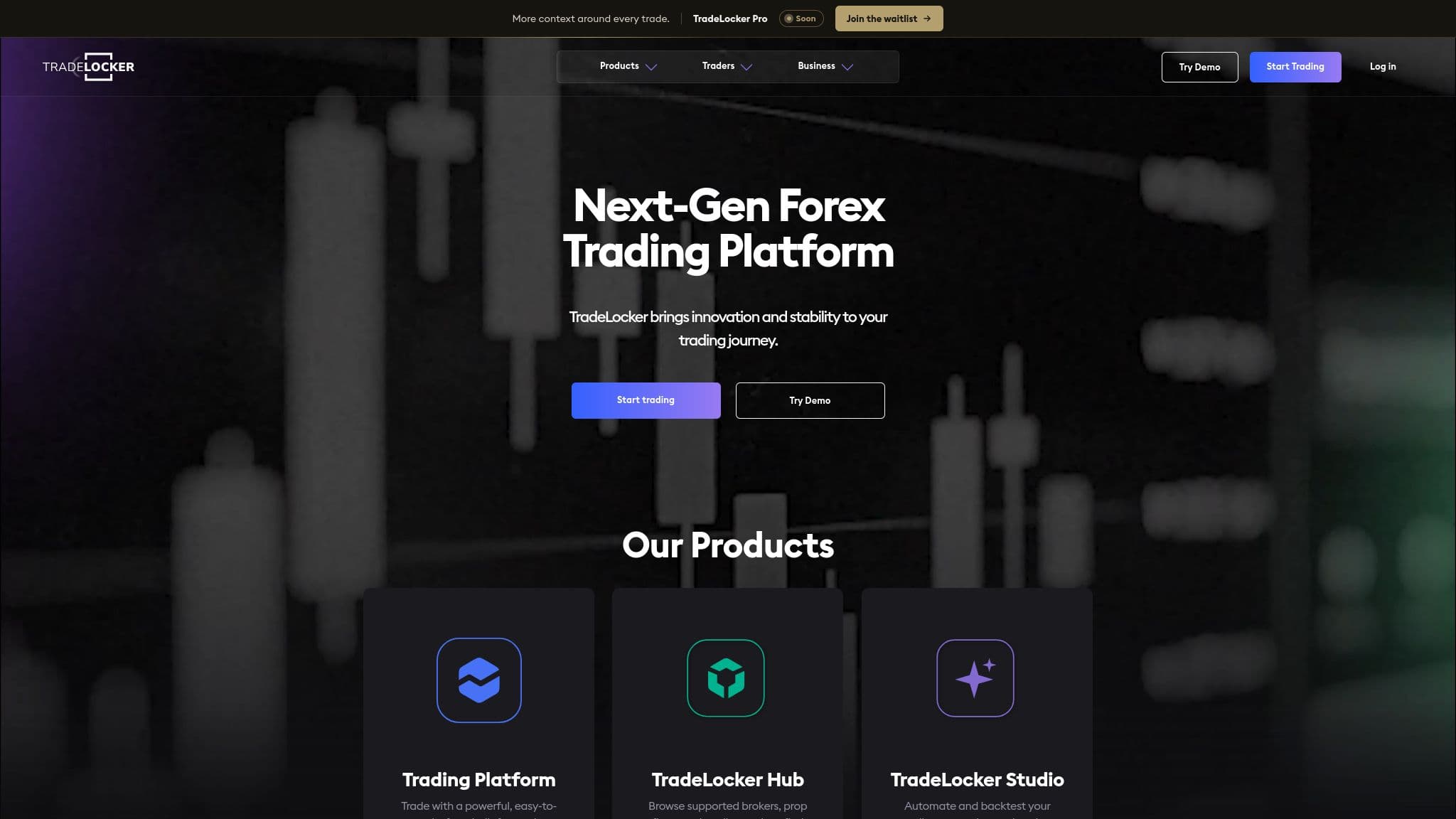
With a cloud copier, you connect both accounts in its dashboard. Copygram's MetaTrader to TradeLocker route works like this:
- Add your MT4 or MT5 account in the Copygram dashboard.
- Add your TradeLocker account: choose the correct server, enter the login details and select the account.
- Create a Room with the MT5 account as the source and TradeLocker as the receiver, then set symbols, quantities and copy settings.
- Test new orders, changes and closes on a demo account before you go live.
With a local copier, the steps happen on your PC or VPS. If your trades come from an EA bought on the MQL5 Market, keep it running on its chart in MT5; the copier only reads the trades it places.
- Install MT5, log in, and open the charts your strategy uses.
- Install the copier software and select the MT5 account as the source.
- Enter your TradeLocker email, password and server name for each receiver account.
- Map symbols and lot sizes, then test on a TradeLocker demo account.
Trade Copier Settings
Set up your trade copier to align with your trading preferences. Key areas to configure include:
- Risk management: Adjust settings to reflect your risk tolerance.
- Trade filters: Define minimum and maximum lot sizes.
- Symbol mapping: Match each MT5 symbol to its TradeLocker name, including broker prefixes or suffixes.
- Slippage tolerance: Set acceptable levels for trade execution.
Tailor these settings based on your account size and risk profile. Ensure your VPS setup can handle the configuration for smooth operation.
Connection Testing
Check these elements to ensure the connection is functioning properly:
-
Trade Check
Open a small demo trade in MT5 and confirm it appears on TradeLocker with the right size, stop loss and take profit. -
Changes and Closes
Move the stop, close part of the position, then close the rest. Each change should copy to TradeLocker. -
Copier Log
Read the copier's log after each test. Missed or rejected trades usually point to symbol mapping, quantity limits or login problems.
For a local copier, keep your VPS connection stable and monitor its resources to maintain effective synchronization between the master and slave accounts.
Performance Tips
Once the copier works on demo, fine-tune it and keep an eye on these critical metrics to ensure smooth trading:
Remote desktop
Your trading computer. In the cloud.
Connect and control your trading strategies from any device, anywhere in the world, through secure remote desktop, while execution remains on QuantVPS.
Choose your cloud trading computerFrom $29.99/mo · Windows or Linux
Copy Metrics
- Copy delay: the time between the MT5 fill and the TradeLocker fill
- Missed or rejected trades in the copier log
- Messages in the MT5 Experts and Journal tabs
To streamline your MT5 setup and reduce resource strain:
- Limit active indicators to only those you need.
- Remove unused Expert Advisors.
- Assign dedicated CPU cores to MT5 instances.
- Stick to a regular system maintenance schedule.
A local copier sends every trade over the internet to TradeLocker, so the network distance adds to the copy delay. A VPS near your brokers' servers keeps it short.
For multi-account setups:
- Assign CPU cores to high-priority accounts.
- Watch CPU and memory use in Windows Task Manager.
- QuantVPS includes automatic off-site backups on every VPS plan, but keep your own copy of the copier settings and symbol maps.
Problem Solving
Common Problems Fixed
When integrating TradeLocker with MT5, traders might face a few recurring challenges. Here's how to tackle them effectively:
Connection and Performance Issues
| Problem | Solution | Impact |
|---|---|---|
| Delayed Trade Copying | Assign specific CPU cores to MT5 terminals | Lowers copy delay on a busy VPS |
| High Resource Usage | Remove unused indicators or EAs | Improves overall system performance |
| Connection Drops | Adjust VPS network settings | Ensures a more stable connection |
| Symbol Not Found | Map the MT5 symbol to the TradeLocker name, including any prefix or suffix | Trades copy to the right instrument |
| Wrong Position Size | Compare contract size and minimum quantity on both accounts, then adjust the lot multiplier | Copied size matches your risk |
Assigning dedicated CPU cores to MT5 terminals can lower copy delay when one VPS runs several terminals.
Critical Monitoring Points:
- Check the copier log for missed or rejected trades.
- Monitor how system resources are being used.
- Check network stability regularly to avoid disruptions.
Regular Updates
Frequent monitoring and timely updates are key to keeping everything running smoothly.
Daily Checks:
- Compare fills on MT5 and TradeLocker.
- Keep tabs on system resource usage.
- Ensure your connection remains stable.
Weekly Maintenance:
- Update the copier software whenever a new version is available.
- Remove unused indicators to free up resources.
- Reevaluate and fine-tune CPU core assignments for optimal performance.
On a Windows VPS, Task Manager and Resource Monitor show CPU, memory and network use for each MT5 terminal, so you can spot problems before they escalate.
Order flow
Built for scalpers. Heatmaps on dedicated resources.
Order-flow heatmaps and DOM ladders run on dedicated CPU, memory and NVMe, so your charts keep responding during volatility.
See the dedicated hardwareFrom $29.99/mo · Windows or Linux
Getting Help
If you're still experiencing issues after regular updates, expert support is available to help.
Technical Support Resources:
- Your copier's help center, and the TradeLocker Public API documentation for local copiers
- A direct support ticket system for personalized assistance
For VPS-related problems, QuantVPS support can help with the server side of the setup. When submitting a support request, make sure to include:
- The exact error message you're encountering
- Details of any recent changes to your system
- MT5 and copier logs for better troubleshooting
- Your VPS configuration details for context
This information helps the support team resolve your issue more quickly and efficiently.
Conclusion
A TradeLocker trade copier lets you keep trading, or running EAs, in MT5 while the same trades land on your TradeLocker accounts. A cloud copier needs no computer of your own. A local copier runs next to MT5 and needs that computer on.
Key Advantages of a Local Copier:
- Lower copy latency with local processing on a VPS near your brokers
- Greater privacy and control
- Lower infrastructure costs
Pairing this setup with consistent performance monitoring keeps your trading system running efficiently. Features like automatic lot size allocation and regular system checks make it scalable and effective.
Tips for Optimizing Performance:
- Assign specific CPU cores to MT5 terminals
- Use auto lot size scaling for better risk management
- Conduct regular system maintenance
- Continuously track copy delay and rejected trades
With a reliable VPS infrastructure, TradeLocker’s features can be fully utilized, forming a strong base for automated trading success.
Running a local TradeLocker copier
Test the copier with one TradeLocker account and one MT5 account on demo, and check symbol mapping and lot sizes before adding the rest. A local copier saves fees but only works while its computer is on. QuantVPS trade copier servers in London or New York keep MT5 and the copier running.


