TakeProfit Trader and Lucid Trading are two proprietary trading firms offering futures traders access to trading capital. Here's a quick breakdown:
- TakeProfit Trader: Offers an 80/20 profit split, which can increase to 90/10 after consistent performance. Evaluation fees start at $130 (one-time activation), with no recurring charges post-evaluation. Supports over 15 platforms, including NinjaTrader and TradingView. Data feeds are included, and withdrawals are fast and flexible.
- Lucid Trading: Profit split details are undisclosed. Evaluation fees are lower, starting at $93 with promotions. Traders must pay $112/month for professional data feeds. Platform compatibility includes NinjaTrader, Rithmic, and others, emphasizing platform flexibility.
Both firms provide VPS hosting through QuantVPS for reliable trade execution. Choose TakeProfit Trader for transparency and platform variety or Lucid Trading for lower entry costs and faster evaluation timelines.
Quick Comparison:
| Feature | TakeProfit Trader | Lucid Trading |
|---|---|---|
| Profit Split | 80/20 (up to 90/10) | Undisclosed |
| Evaluation Fees | $130 one-time | $93+ with promotions |
| Data Costs | Included | $112/month (professionals) |
| Platforms | 15+ platforms supported | NinjaTrader, Rithmic, etc. |
| Withdrawals | Fast and flexible | Details not provided |
Your choice depends on whether you prioritize transparent profit splits and platform options (TakeProfit Trader) or lower costs and faster evaluations (Lucid Trading).
Which Prop Firm Has Best Payouts?
TakeProfit Trader: Features and Benefits
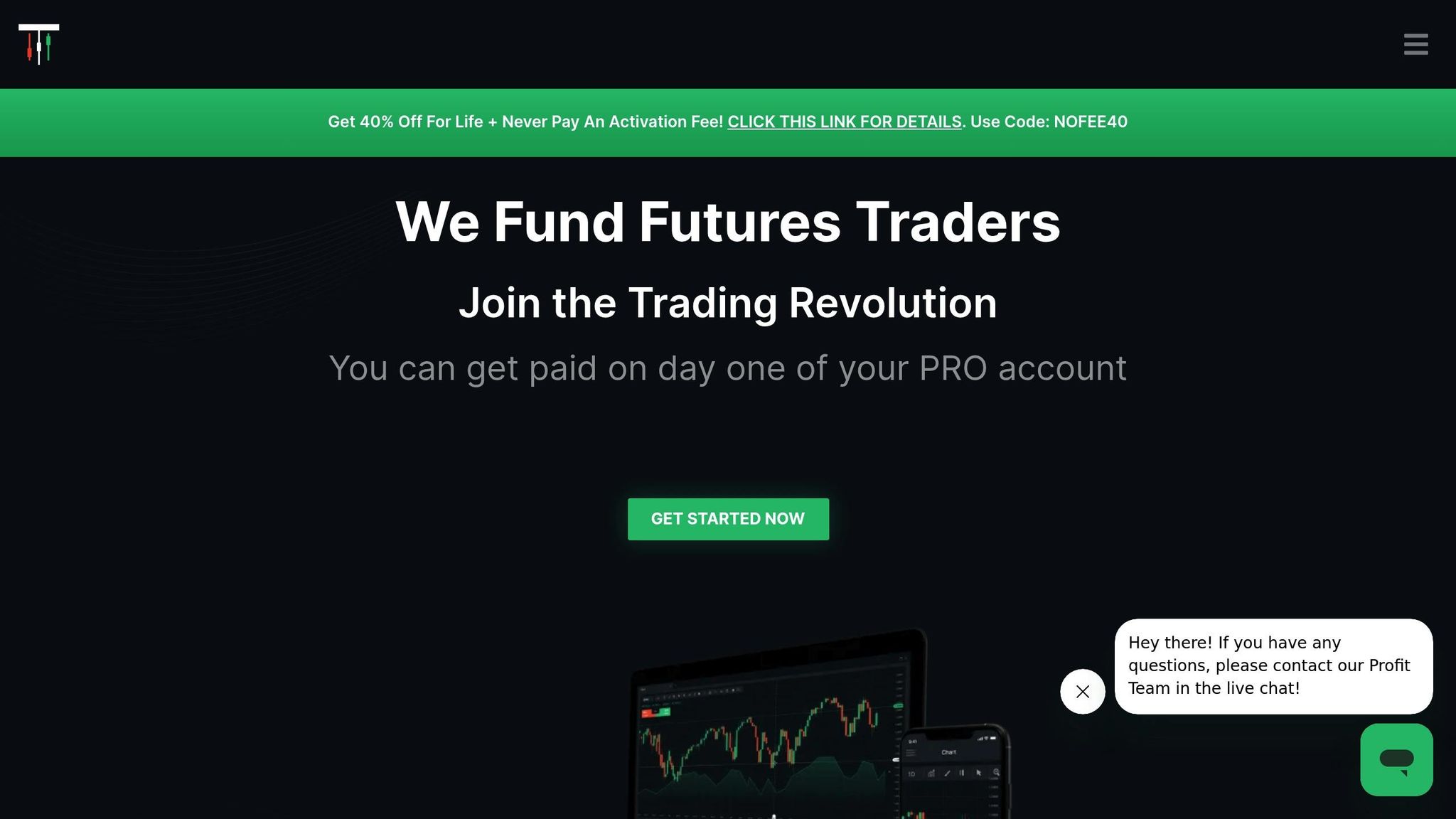
TakeProfit Trader has carved a niche in the proprietary trading space with its trader-centric approach, offering flexible profit structures, immediate withdrawals, and seamless platform integration. Here's a closer look at what sets them apart, including their profit split system, evaluation process, and platform support.
Profit Split Structure
TakeProfit Trader uses a two-tier profit split system that rewards traders for consistent performance. New PRO account holders start with an 80/20 split, meaning traders keep 80% of their profits - a rate that outpaces many competitors in the industry.
The real game-changer is the PRO+ upgrade, which increases the profit split to 90/10 after either 60 days of steady trading or achieving a $10,000 profit in a single day. This 90% share ranks among the highest offered by futures-focused proprietary trading firms.
Withdrawals are another standout feature. PRO account holders can withdraw their 80% share once they reach the "buffer zone" - the maximum drawdown level - without having to meet minimum trading day requirements or follow rigid payout schedules. For PRO+ accounts, restrictions are removed entirely, allowing traders to withdraw profits at any time. Payments are processed quickly, typically within one business day, through US bank accounts (via Plaid) or platforms like PayPal and Wise.
"I've told people, I said you need to look at TakeProfit because they have changed the nature of the prop industry where you had to wait this long period of time and invest all this capital in order to get a payout."
- Coleman, TakeProfit Trader Trader

Run 24/7 while you sleep. Keep bots, platforms, and trade copiers online on a dedicated VPS.
Low-latency VPS hosting for your trading platform.
 CHINYC
 LON
LONFrom $29.99/mo


 CHI/CME futuresNYC/US marketsLON/FX EAs
 DUB/Polymarket
 AMS/EU FX
 FRA/Central EU
 TYO/APAC crypto
In addition to offering competitive profit splits, TakeProfit Trader has designed its fee structure to reduce costs for traders.
Evaluation Fees and Process
TakeProfit Trader takes a straightforward approach to fees. With a one-time $130 activation fee for PRO accounts, traders avoid ongoing monthly charges after the evaluation phase. This setup can lead to considerable savings compared to firms that impose recurring fees even after funding.
The evaluation process focuses on risk management, prioritizing consistent performance within drawdown limits rather than requiring traders to hit arbitrary profit targets. This method supports a long-term trading mindset, which is essential for success in the futures market.
Funding for payouts comes from a transparent model: fees collected during evaluations, technology charges, and shared profits from PRO+ accounts. This ensures that traders receive their earnings without unnecessary delays or complex approval steps.
"Your company makes me feel like I'm a real trader, like it's a tangible dream. And I really, really like that."
- Ben, TakeProfit Trader Trader
Platform Support and Compatibility
TakeProfit Trader supports multiple trading platforms, understanding that platform choice can significantly impact performance - especially in fast-paced futures markets where execution speed is critical.
For enhanced trading performance, QuantVPS offers high-performance VPS hosting tailored for futures trading. With ultra-low latency connections and a 100% uptime guarantee, QuantVPS ensures traders can execute their strategies seamlessly without technical disruptions. This focus on reliable infrastructure aligns with the firm's commitment to supporting traders in the US futures market.
"The quick payouts, the user-friendly portal, and the great customer service - I mean, you all are very responsive."
- Rica, TakeProfit Trader Trader
The firm’s intuitive portal simplifies everything from account management to withdrawal requests and performance tracking. With these tools, traders can spend less time on administrative tasks and more time honing their strategies in the markets.
Lucid Trading: Features and Benefits
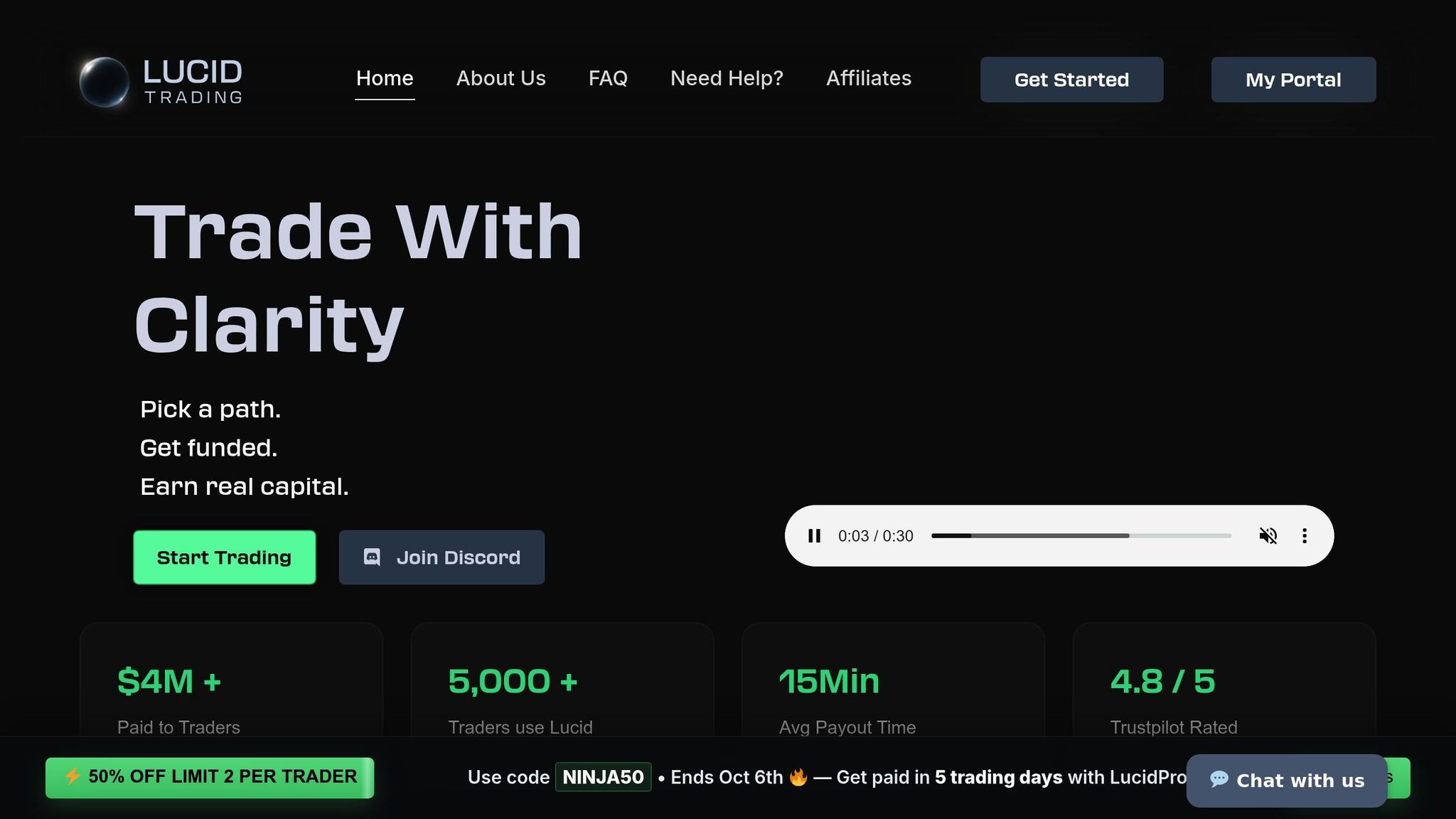
Lucid Trading stands out by offering traders the freedom to choose their platforms, competitive profit-sharing arrangements, and dependable execution in the futures market.
Profit Split Structure
Lucid Trading provides a profit-sharing model designed to be competitive. However, the specific percentages and withdrawal details are not disclosed. To better understand the platform, it’s worth exploring their evaluation fees and process.
Evaluation Fees and Process
Lucid Trading goes beyond just fees by focusing on a trading experience that closely mirrors live market conditions. To get started, traders must sign Rithmic Trading Agreements through the RTrader application or a dedicated Mac link, ensuring proper connectivity and compliance. For access to market data, professional traders pay $112 per exchange monthly for CME, CBOT, NYMEX, and COMEX feeds, while non-professional traders receive these feeds as part of their Qualification Account.
Platform Support and Compatibility
Lucid Trading emphasizes flexibility with its "Platform Freedom" approach, allowing traders to use their preferred software. The platform relies on Rithmic for data and order routing and has partnerships with MotiveWave and Quantower, accessible via the LucidDashboard. Additionally, promotional materials highlight support for NinjaTrader. For those looking to enhance performance, Lucid Trading users can benefit from QuantVPS's ultra-low latency solutions. Real-time data dashboards are also available, providing instant updates on trading performance.
These features collectively reflect Lucid Trading’s focus on offering flexibility and an accessible entry point to the futures market.
Direct Comparison: TakeProfit Trader vs Lucid Trading
When deciding between TakeProfit Trader and Lucid Trading, US futures traders need to weigh their options carefully. These two proprietary trading firms differ significantly in areas like compensation, evaluation processes, and platform compatibility. Here's a closer look at how they stack up.
TakeProfit Trader stands out with its transparent profit splits and fee structures, which are clearly outlined. In contrast, Lucid Trading does not disclose these details, leaving traders with less clarity when planning their financial strategies and career paths.
Platform support is another key area where the two firms diverge. TakeProfit Trader offers compatibility with over 15 trading platforms, with NinjaTrader 8 as its primary focus. Other supported platforms include TradingView, Tradovate, and Quantower. They also provide access to both CQG and Rithmic data feeds, giving traders flexibility in market connectivity. On the other hand, Lucid Trading emphasizes its "Platform Freedom" approach, highlighting NinjaTrader support in its promotions. However, the full extent of its platform compatibility isn't fully detailed in available resources.
Additionally, TakeProfit Trader works with regulated brokers and CME-approved data providers, creating a more structured environment for traders. Lucid Trading, by contrast, requires traders to sign Rithmic Trading Agreements and charges a $112 monthly data fee for professional traders - an ongoing cost that could impact profitability.
Comparison Table: Main Metrics
Stay online and closer to execution. Choose a VPS location for CME futures, New York markets, London FX, API trading, and more.
Host your platform near the market route that matters.
CHINYCLONFrom $29.99/mo
CHI/CME futuresNYC/US marketsLON/FX EAsDUB/PolymarketAMS/EU FXFRA/Central EUTYO/APAC cryptoFor a quick overview, here's a side-by-side comparison of the main features:
| Feature | TakeProfit Trader | Lucid Trading |
|---|---|---|
| Initial Profit Split | 80/20 (trader/firm) | Undisclosed |
| Advanced Profit Split | 90/10 after 60 days | Undisclosed |
| Platform Support | 15+ platforms, NinjaTrader 8 primary | Platform Freedom, NinjaTrader confirmed |
| Data Feeds | CQG and Rithmic | Rithmic required |
| Market Data Costs | Included in evaluation | $112/month for professionals |
| Evaluation Requirements | Regulated broker accounts | Rithmic Trading Agreements |
| Transparency Level | High - clear structure disclosed | Limited - key details undisclosed |
| VPS Compatibility | Full QuantVPS support for all platforms | QuantVPS ultra-low latency solutions available |
Both firms integrate QuantVPS for better execution speeds, but TakeProfit Trader provides broader multi-platform support. Lucid Trading, on the other hand, focuses on optimizing connectivity through Rithmic.
Finally, Lucid Trading's $112 monthly data fee is an important cost to keep in mind, particularly for professional traders looking to manage their expenses effectively.
Choosing the Right Fit for US-Based Futures Traders
Finding the right trading firm isn't just about picking the cheapest option. It's about matching your trading goals, budget, and technical preferences with a firm that aligns with your style. Below are some key factors to consider when making your decision.
Factors to Consider
Budget and Evaluation Costs
TakeProfit Trader charges $170 per month for a $50,000 evaluation account. With promo codes, this cost can drop to as low as $102. If you need to reset your account, it will cost an additional $100, bringing the total to $304 over two months. On the other hand, Lucid Trading offers a similar $50,000 evaluation for $93 when using promo codes. They also frequently run promotions, like the "NINJA LAUNCH SALE", which provides a 50% discount.
Speed of Evaluation
If you're looking to progress quickly, Lucid Trading allows traders to achieve LucidPro status in just one day. In contrast, TakeProfit Trader requires a minimum of five trading days to reach "PRO Account" status. While the shorter timeline at Lucid Trading might appeal to experienced traders, the extended evaluation period at TakeProfit Trader could be helpful for newer traders aiming to demonstrate consistent performance.
Platform Flexibility
TakeProfit Trader supports over 15 trading platforms, giving you plenty of options to choose from. Lucid Trading emphasizes platform freedom as well, allowing traders to work with tools they are already comfortable using.
Profit Sharing Transparency
TakeProfit Trader provides a straightforward profit-sharing model, starting at an 80/20 split and progressing to a 90/10 split as you advance.
Automated Trading Strategies
Both firms support automated trading through tools like TradingView and TrendSpider, using TradersPost for integration. TakeProfit Trader extends this automation across its supported platforms, while Lucid Trading offers automation via ProjectX.
VPS Hosting Requirements
For traders relying on automation or high-frequency strategies, both firms benefit from QuantVPS's ultra-low latency hosting, ensuring reliable and fast connections.
If you value transparent pricing and a wide range of platform options, TakeProfit Trader might be the better choice. However, if speed of evaluation and lower initial costs are your priorities, Lucid Trading could be the way to go.
Conclusion
TakeProfit Trader and Lucid Trading each bring unique benefits to US futures traders. TakeProfit Trader stands out with its structured profit splits and broad platform compatibility, though it comes with a longer and more expensive evaluation process. On the other hand, Lucid Trading appeals to those seeking lower fees and a quicker evaluation timeline.
The best choice ultimately hinges on your priorities. If keeping costs low and moving through the evaluation quickly aligns with your strategy, Lucid Trading could be the way to go. But, if you prefer flexibility across platforms and a more in-depth evaluation process, TakeProfit Trader may be the better match.
One thing remains constant: a dependable trading infrastructure is key. Both platforms can greatly benefit from fast and reliable VPS hosting through QuantVPS, ensuring smooth trade execution - especially for automated strategies or when managing multiple positions.
Evaluate your trading goals, budget, and technical needs carefully to make the right decision.
FAQs
How do the evaluation fees and ongoing costs compare between TakeProfit Trader and Lucid Trading?
TakeProfit Trader charges evaluation fees that usually fall between $150 and $360, with reported success rates of less than 21%. Additionally, ongoing costs - like monthly fees or profit splits - vary based on the specific program you choose.
In contrast, Lucid Trading keeps things simpler. For example, the evaluation fee for a $50,000 account is about $93, with no activation fee. The total cost to secure funding is approximately $73.15.
Overall, TakeProfit Trader's evaluation fees are generally higher and come with more unpredictable ongoing expenses, while Lucid Trading offers lower upfront costs and a more straightforward pricing structure.
What is TakeProfit Trader's profit split system, and how can traders qualify for a higher split?
TakeProfit Trader starts traders off with an 80/20 profit split, giving the bulk of the earnings to the trader. But here’s the exciting part: after 60 days of consistent, successful trading, you can level up to PRO+ status, where the profit split shifts to 90/10 in your favor. This setup not only rewards sustained performance but also motivates traders to aim for long-term success.
What trading platforms do these firms offer, and how do they affect performance and flexibility?
TakeProfit Trader offers compatibility with more than 15 trading platforms, including popular options like NinjaTrader and TradingView. It also provides access to trusted data feeds such as CQG and Rithmic, giving traders the flexibility to choose tools that align with their trading styles and strategies.
In contrast, Lucid Trading does not explicitly list the platforms it supports. This lack of clarity may pose challenges for traders who rely on specific tools or features to execute their strategies effectively.