Looking for a proprietary trading firm that supports CFD trading? Here's a quick rundown of the top options in 2026. These firms provide traders with access to global markets, leverage options, and funded accounts for trading CFDs. Each firm offers unique features like profit-sharing models, evaluation programs, and platform support.
Key Highlights:
- FTMO: Rigorous evaluation, 80/20 profit split, up to $2M account scaling, MetaTrader 4/5.
- FXIFY: Flexible programs, scaling up to $4M, supports MetaTrader 4/5 and DXTrade.
- The5ers: Focus on consistency, scaling opportunities, MetaTrader 4/5.
- DNA Funded: Competitive leverage, limited withdrawal transparency.
- Funded Trading Plus: Multiple platform options (MT5, cTrader, DXTrade), demo accounts.
- MyFundedFX: Quick evaluations, strong customer support, DXTrade/cTrader.
- FundedNext: Variety of platforms, flexible trading styles, newer in the market.
- VisionTrade Forex & Futures: Futures and CFD trading, limited transparency.
- FundingPips: Simple process, affordable fees, fewer platform options., MT4 support, rapid payouts.
Quick Comparison:
| Firm | Key Features | Best For |
|---|---|---|
| FTMO | $2M scaling, MT4/5, strict risk management | Disciplined traders |
| FXIFY | $4M scaling, flexible programs | Experienced CFD traders |
| The5ers | Scaling rewards, consistency focus | Long-term traders |
| DNA Funded | High leverage, diverse instruments | Risk-tolerant traders |
| Funded Trading Plus | Multiple platforms, demo accounts | Traders seeking platform variety |
| MyFundedFX | Fast evaluation, strong support | Quick-start traders |
| FundedNext | Multiple platforms, flexible trading styles | Growth-focused traders |
| VisionTrade | Futures and CFDs | Multi-market traders |
| FundingPips | Affordable fees, simple process | Quick-start trader, experienced traders |
Each firm has pros and cons, so choose based on your trading goals, risk tolerance, and preferred platforms.
CFD VS FUTURES Prop Firms - Different Price Feeds
1. FTMO
FTMO has built a strong reputation as a top choice for traders looking for funded accounts. Based in the Czech Republic, this firm is particularly popular among CFD traders, thanks to its rigorous evaluation process and trader-focused policies.
Trading Platforms
FTMO provides access to MetaTrader 4 and MetaTrader 5, two of the most widely used platforms in the CFD trading world. These platforms support trading across forex, commodities, indices, and cryptocurrencies. They come packed with advanced charting tools, technical indicators, and the ability to use Expert Advisors for automated trading. This makes them a solid choice for traders who rely on algorithmic strategies (usually hosted on a MetaTrader VPS) or systematic approaches to CFD trading.
Fee Structure and Profit Split
FTMO operates on an 80/20 profit-sharing model, which remains consistent regardless of the account size, ranging from $10,000 to $200,000. To participate, traders pay a one-time evaluation fee, which starts at $155 for the $10,000 challenge and goes up to $1,080 for the $200,000 challenge. Here's the good news: this fee is refunded after the first profit split, effectively making the evaluation phase free for successful traders. There are no hidden charges or recurring platform fees, and traders can withdraw profits every 14 days once they pass the evaluation.
Leverage and Account Scaling
FTMO offers leverage of up to 1:100 for major forex pairs, while more volatile instruments like index and commodity CFDs come with lower leverage ratios, such as 1:20 and 1:10, aligning with regulatory standards. For traders who consistently perform well, FTMO has an account scaling program that can increase funded capital up to $2 million. This scaling depends on maintaining consistent profits, managing drawdowns effectively, and adhering to the firm’s risk guidelines.
Key Features for CFD Traders
FTMO has a well-structured risk management system designed specifically for CFD traders. They enforce a daily loss limit of 5% and an overall drawdown limit of 10% of the initial account balance. This approach balances trading flexibility with the need to protect capital. Traders also benefit from a proprietary dashboard that provides real-time insights into account metrics and risk exposure, ensuring they stay on top of their performance.
Beyond risk management, FTMO supports its traders with a range of educational tools. These include webinars on CFD trading strategies, market analysis, and risk management, as well as resources focused on trading psychology to help traders stay disciplined in volatile markets.
Up next, we’ll take a closer look at FXIFY and the features it brings to the table for CFD traders.
2. FXIFY

FXIFY, launched in 2023 and based in the UK, has quickly made its mark as a prop trading firm. Despite being a newcomer, it has already built a strong reputation among CFD traders, boasting a 4.1 out of 5.0 rating on Trustpilot from 2,576 reviews. What sets FXIFY apart is its flexible trading options and a range of platforms designed to suit diverse trader needs.
Trading Platforms
FXIFY provides three trading platforms to cater to different preferences and regional restrictions. Non-U.S. traders can choose between MetaTrader 4 and MetaTrader 5, while U.S.-based traders are offered the DXTrade platform. All accounts operate through FXPIG, ensuring raw spread trading starting from 0.0 pips and 100% straight-through processing (STP) execution. Traders can pick between RAW spreads or commission-free pricing, depending on their strategy.
The firm supports a variety of advanced trading approaches, including Expert Advisors (EAs), algorithmic trading, martingale, grid trading, and news-based strategies. Traders can hold positions over weekends without restrictions and are not bound by consistency rules, offering greater flexibility. FXIFY’s fee structure complements this adaptable trading environment.
Fee Structure and Profit Split
FXIFY offers multiple account types, each with its own fee structure and profit-sharing model. Programs include 1-Phase, 2-Phase, 3-Phase, Instant Funding, and Lightning, giving traders options tailored to their experience and risk tolerance. Evaluation fees depend on the account size and program, but these fees are reimbursed after the first profit withdrawal.
Leverage and Account Scaling
FXIFY provides different leverage ratios depending on the asset class, with forex trading offering the highest leverage. Standard accounts allow up to 30:1 leverage for forex and gold, which can be increased to 50:1 through an optional add-on during checkout.
| Asset Class | 1-Phase | 2-Phase | 3-Phase | Instant Funding | Lightning |
|---|---|---|---|---|---|
| Forex | 1:50 | 1:50 | 1:50 | 1:50 | 1:30 |
| Metals | 1:30 | 1:30 | 1:30 | 1:20 | 1:10 |
| Indices | 1:10 | 1:10 | 1:10 | 1:15 | 1:10 |
| Oil | 1:5 | 1:5 | 1:5 | 1:5 | 1:10 |
| Stocks | 1:2 | 1:2 | 1:2 | 1:2 | N/A |
| Crypto | 1:2 | 1:2 | 1:2 | 1:2 | 1:1 |
Some forex pairs are capped at a fixed leverage of 1:6 across all programs. This structured leverage system helps traders manage risk more effectively when dealing with CFDs.

Your trading computer. In the cloud.
Connect and control your trading strategies from any device, anywhere in the world, through secure remote desktop, while execution remains on QuantVPS.
From $29.99/mo · Windows or Linux · 8 datacenters
0.52ms to CME from our Chicago nodes.


 NinjaTrader
 MetaTrader
 TradingView
 Tradovate
 Rithmic
 Sierra Chart
 Bookmap
 Quantower
Key Features for CFD Traders
FXIFY stands out with features designed to enhance the trading experience for CFD traders. One of the most appealing aspects is its scaling program, which allows traders to grow their funded accounts significantly. Consistent performers can scale their capital up to $4,000,000 through a structured system . Scaling occurs every three months for traders who achieve a 10% return, with at least two profitable months during that period. Account balances can double at each stage, meaning a trader starting with $400,000 could reach $4,000,000 in a year if they meet performance goals. The first scale-up offers a 25% boost after the initial qualifying period.
Next, we’ll take a closer look at The5ers and how it meets the needs of CFD traders.
3. The5ers
The5ers stands out by offering substantial funding and accommodating conditions through its structured evaluation programs designed for CFD traders.
Trading Platforms
The5ers supports its traders with the widely-used MetaTrader 4 and 5 platforms, which cater to both manual and automated trading strategies. These platforms allow traders to work with forex pairs, indices, commodities, and metals. Plus, traders can hold positions over the weekend, providing more flexibility in managing their trades.
Fee Structure and Profit Split
The5ers operates on a challenge-based model, where traders go through an evaluation phase. A key perk? The evaluation fee is refunded after the first profitable trade. As traders demonstrate consistent performance, they are rewarded with a better profit split, incentivizing steady growth.
Leverage and Account Scaling
The5ers uses a tiered leverage system designed to strike a balance between risk and capital efficiency. Traders who perform well can see their account size grow over time, thanks to regular performance reviews and adherence to set risk management guidelines.
Key Features for CFD Traders
CFD traders benefit from several supportive policies at The5ers. The evaluation period is flexible, with no strict minimum trading days, allowing traders to advance at their own speed. The platform enforces clear risk management rules to encourage disciplined trading and long-term success. Additional tools like copy trading and detailed performance analytics help traders fine-tune their strategies. On top of that, a structured payout schedule ensures consistent cash flow for traders who meet performance benchmarks.
4. DNA Funded
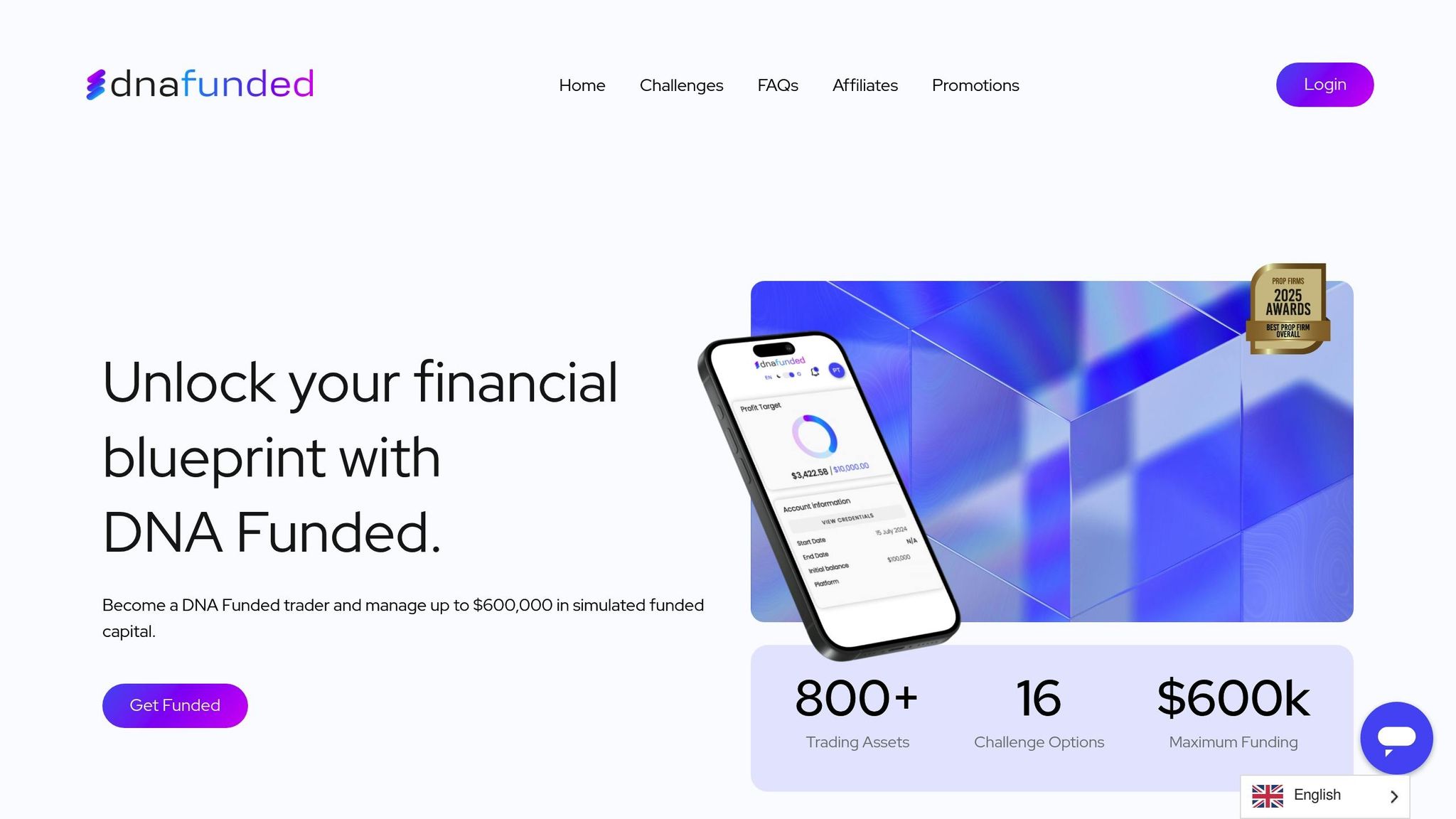
DNA Funded operates as a proprietary trading firm that facilitates CFD trading. Currently, specific details about its trading platforms, fee structures, leverage options, and account scaling processes are not yet available. As soon as verified information is confirmed, we’ll provide updates to this section.
Next, let’s explore the features offered by Funded Trading Plus.
5. Funded Trading Plus
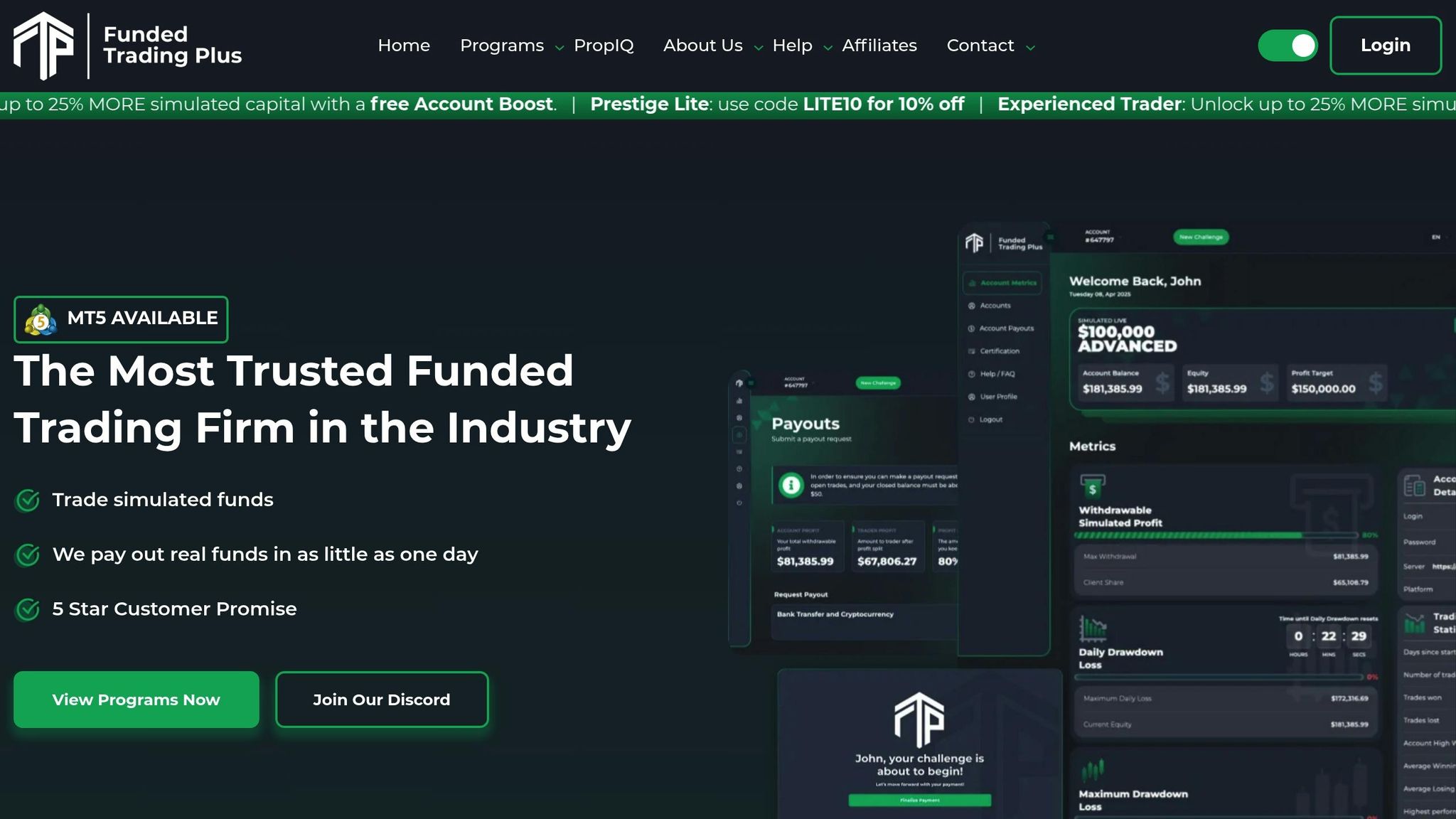
Funded Trading Plus distinguishes itself by offering four different platforms for CFD trading. This variety gives traders the freedom to pick the platform that aligns best with their trading style and technical needs.
Trading Platforms
Traders can access MetaTrader 5 (MT5), Match-Trader, cTrader, and DXtrade platforms. Each platform is packed with features like advanced charting tools, automated trading options, and one-click execution.
For those looking to test the waters, demo accounts are available, allowing risk-free practice with live market pricing and virtual funds. Additionally, Expert Advisors (EAs) are supported on both cTrader and MT5.
| Platform | Key Features | EA Support | Demo Availability | User Experience Notes |
|---|---|---|---|---|
| MetaTrader 5 (MT5) | Advanced charting, automated trading, one-click execution | Yes | Yes | Intuitive interface |
| Match-Trader | Advanced charting, automated trading, one-click execution | Not stated | Yes | Low spreads |
| cTrader | Advanced charting, automated trading, one-click execution | Yes | Yes | Highly reliable |
| DXtrade | Advanced charting, automated trading, one-click execution | Not specified | Yes | Accessible via web |
Traders have particularly noted the low spreads on Match-Trader, a feature that can make a big difference for those who trade CFDs frequently and aim to maximize their profitability.
Next, let’s explore how MyFundedFX compares to this offering.
6. MyFundedFX
MyFundedFX offers strong support for CFD trading through top-tier platforms like DX Trade and cTrader, both recognized for their advanced tools and automation features. These platforms are designed to provide fast execution speeds and detailed technical analysis, making them ideal for traders who rely on precise timing and in-depth market insights.
Trading Platforms
MyFundedFX prioritizes platforms that excel in performance and reliability. DX Trade is a web-based platform offering institutional-grade execution, while cTrader stands out with its advanced charting tools and support for algorithmic trading. Both platforms are compatible with Expert Advisors and automated trading systems, making them a great fit for systematic CFD trading strategies.
Fee Structure and Profit Split
The firm uses a challenge-based evaluation model and offers a competitive profit-sharing arrangement. One notable benefit is the refund of evaluation fees once traders successfully complete the funding process, a feature commonly seen among leading proprietary trading firms.
Key Features for CFD Traders
Risk management is a central focus at MyFundedFX, with structured drawdown limits and daily loss controls in place. Traders enjoy flexible rules that cater to a variety of CFD strategies, including the option to hold positions over weekends. The evaluation process is designed to identify consistently successful traders while providing enough flexibility to accommodate different trading styles.
Next, we’ll take a look at how FundedNext brings its own spin to supporting CFD traders.
7. FundedNext
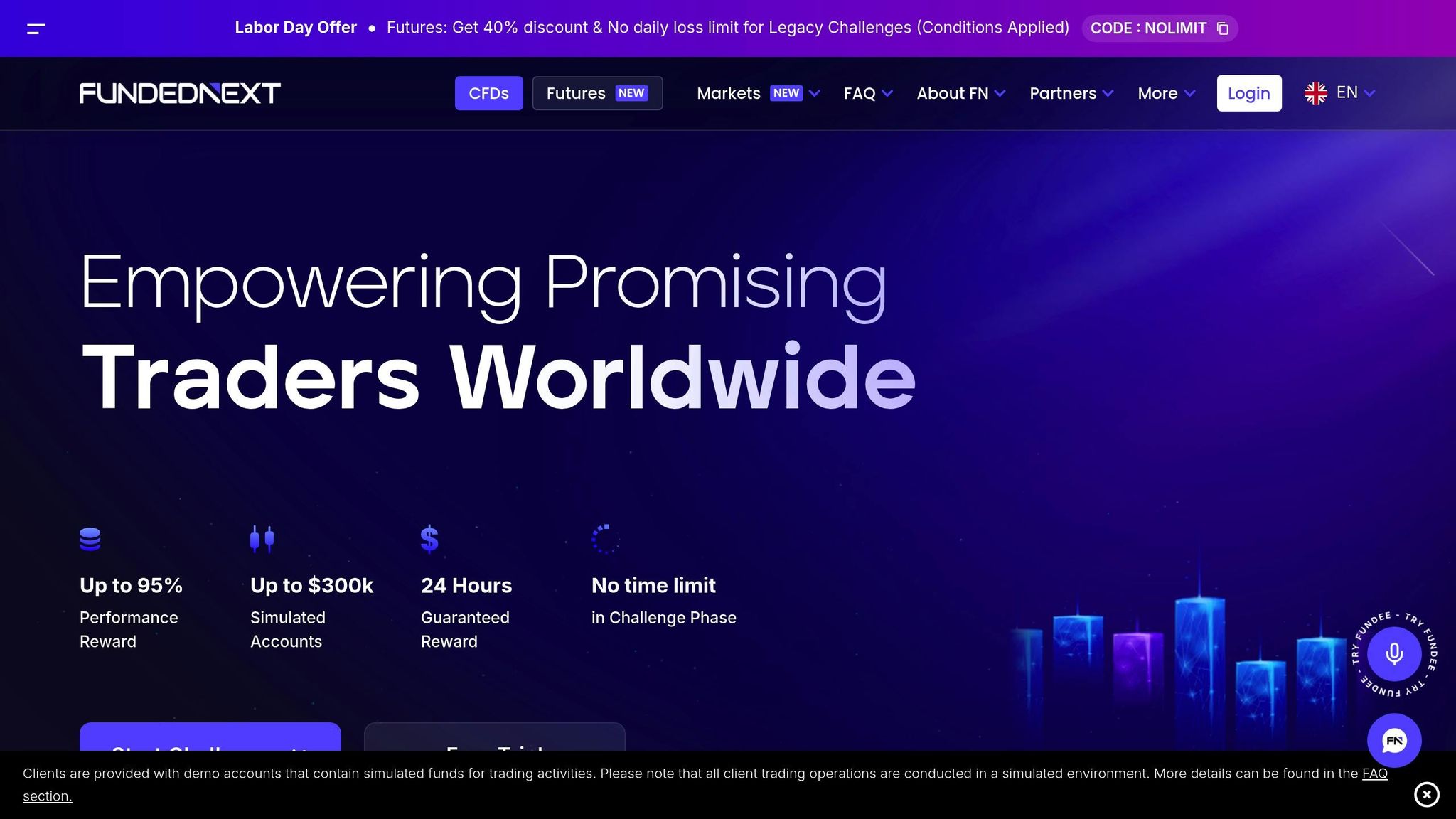
FundedNext sets itself apart by offering four distinct trading platforms for CFD trading: MetaTrader 4, MetaTrader 5, cTrader, and Match-Trader. This variety ensures traders can select a platform that aligns with their trading preferences, whether they lean toward automated systems or manual strategies.
Trading Platforms
FundedNext’s platform options cater to a wide range of trading styles. MetaTrader 4 and MetaTrader 5 are available free of charge and are particularly suited for algorithmic trading, thanks to their support for Expert Advisors. MT5 takes it a step further with additional order types and an expanded set of technical indicators, making it a strong choice for traders seeking deeper market analysis.
For those who prefer manual trading, cTrader offers a user-friendly interface with features like Level II market depth pricing and advanced order management tools, including trailing stops. On the other hand, Match-Trader is a browser-based platform requiring no downloads, providing quick and easy access across multiple devices. However, both cTrader and Match-Trader come with a $25 fee and are unavailable for $100,000 and $200,000 accounts in the Stellar 1-Step and 2-Step programs.
Fee Structure
While MetaTrader 4 and MetaTrader 5 are free to use, cTrader and Match-Trader incur a $25 fee, applicable only to specific account setups. Additionally, these two platforms are restricted for larger accounts in the Stellar 1-Step and 2-Step programs.
Key Features for CFD Traders
FundedNext’s platforms support a variety of trading styles, including algorithmic, copy, news, and weekend trading, offering flexibility for diverse CFD strategies. The trading infrastructure is designed to replicate real market conditions, ensuring fast execution, high uptime, and precise order handling.
All platforms are accessible across desktop, web, and mobile devices, enabling traders to manage positions and respond to market changes seamlessly, no matter where they are. This cross-device functionality is especially useful for CFD traders who need to stay active during different trading sessions.
The range of platforms ensures traders have the freedom to explore multiple interfaces, helping them find the one that optimizes their trading performance. Up next, we’ll look at how VisionTrade Forex & Futures adds to the support for CFD trading.
Stay online and closer to execution. Choose a VPS location for CME futures, New York markets, London FX, API trading, and more.
8 datacenters help your platforms keep running day and night without depending on your home PC.
From $29.99/mo · Windows or Linux · 8 datacenters
0.52ms to CME from our Chicago nodes.

8. VisionTrade Forex & Futures
It’s challenging to evaluate VisionTrade Forex & Futures' CFD offerings due to the lack of publicly available information.
Trading Platforms
Details about the trading platforms used by VisionTrade are not disclosed.
Fee Structure and Profit Split
Information regarding fees or profit-sharing arrangements is also unavailable.
Key Features for CFD Traders
The absence of detailed information means CFD traders must reach out to VisionTrade directly to inquire about essential aspects like leverage, available instruments, risk management tools, and customer support. This lack of transparency sets VisionTrade apart from other firms that provide comprehensive details upfront, which could be a disadvantage for those considering their services.
9. FundingPips
FundingPips follows a similar approach to The5ers, offering opportunities for CFD traders with features tailored to accommodate a variety of trading strategies.
Details about FundingPips, including its trading platforms, fee structures, leverage options, and account scaling programs, will be shared soon. This will help CFD traders make more informed decisions when considering their funding options.
Up next, we'll dive into DNA Funded and explore what it brings to the table for CFD trading professionals.
Atmos Funded is another prop firm worth examining, but it offers limited transparency regarding its CFD trading services. Important details - such as trading platforms, fee structures, and specific parameters for CFD trading - are not readily available. Traders interested in working with this firm may need to reach out directly to get the most accurate and up-to-date information.
Trading Platforms
Atmos Funded does not provide clear information about the trading platforms it supports. It’s unclear whether traders have access to widely-used platforms like MetaTrader 4, MetaTrader 5, or any other specialized software tailored for CFD trading.
Fee Structure and Profit Split
Details about the fee structure, including evaluation fees and profit-sharing arrangements, have not been disclosed. For traders seeking clarity on these aspects, contacting Atmos Funded directly is likely the best course of action.
Key Features for CFD Traders
The firm does not outline critical CFD trading details such as available instruments, leverage ratios, or risk management policies. If these factors are essential to your trading strategy, it’s advisable to approach Atmos Funded directly to confirm whether their offerings align with your needs.
Advantages and Disadvantages
Each trading firm comes with its own set of strengths and weaknesses, making them suitable for different types of traders. Here's a breakdown of the key takeaways for each firm based on their unique offerings and limitations.
FTMO is well-regarded for its strong reputation and thorough evaluation process, making it a great choice for traders who value structure and discipline. On the downside, the evaluation fees can be a hefty upfront cost.
FXIFY stands out with attractive profit splits and flexible trading conditions, which many CFD traders appreciate. However, consistently meeting its evaluation criteria can be a significant hurdle for some.
The5ers offers a standout scaling program that rewards traders who show consistency and skill development. That said, its initial funding amounts are relatively modest, which may not appeal to seasoned traders aiming for higher profits.
FundingPips draws traders with its simple evaluation process and affordable fees. But the limited platform options might be a dealbreaker for those who rely on specific trading software.
DNA Funded provides competitive leverage ratios and access to a variety of CFD instruments. Still, its profit withdrawal process can be more complicated compared to other firms.
Funded Trading Plus caters to diverse trader preferences with multiple evaluation tracks. However, the varying fee structures across its programs can be confusing, especially for newcomers.
MyFundedFX impresses with quick evaluation processing and excellent customer support. Yet, its selection of CFD instruments is narrower than what larger firms typically offer.
FundedNext brings innovative challenge formats and competitive terms for successful traders. Being a newer player in the market, it lacks the long-term track record of more established firms.
VisionTrade Forex & Futures appeals to traders looking for diversification, offering specialized futures support alongside CFDs. But its higher evaluation fees might deter those on a tighter budget.
Atmos Funded presents challenges due to its lack of transparency. Without readily available details, traders must directly contact the firm to determine if it aligns with their needs.
| Firm | Key Advantages | Main Disadvantages | Best For |
|---|---|---|---|
| FTMO | Strong reputation, rigorous evaluation | High evaluation fees | Disciplined, serious traders |
| FXIFY | Attractive profit splits, flexible trading | Challenging evaluation criteria | Experienced CFD traders |
| The5ers | Scaling program, rewards consistency | Lower initial funding amounts | Long-term, consistent traders |
| FundingPips | Simple process, affordable fees | Limited platform options | Beginner to intermediate traders |
| DNA Funded | Competitive leverage, diverse instruments | Complex withdrawal procedures | Leverage-focused traders |
| Funded Trading Plus | Multiple evaluation tracks, flexible options | Confusing fee structures | Traders seeking customization |
| MyFundedFX | Fast evaluation, strong support | Limited instrument selection | Quick-start traders |
| FundedNext | Innovative challenges, competitive terms | Shorter market presence | Growth-oriented traders |
| VisionTrade | Futures specialization, diversification | Higher evaluation fees | Multi-market traders |
| Atmos Funded | Potentially competitive terms | Lack of transparency | Proactive, research-driven traders |
When choosing a firm, platform compatibility is another critical factor. While many firms rely on standard MetaTrader options, some offer proprietary platforms or specialized tools that suit specific trading strategies.
Risk management rules also vary widely. Firms with stricter daily loss limits and drawdown policies tend to protect their capital more effectively but can restrict aggressive trading styles. On the other hand, more lenient risk parameters allow for greater flexibility but demand a higher level of self-discipline from traders.
This comparison provides a clear foundation for evaluating which firm aligns best with your trading goals and preferences.
Conclusion
Choosing the right CFD prop firm requires a careful look at factors that can impact your success as a trader. Each firm has its own approach to CFD trading, offering distinct advantages. For instance, FTMO stands out with its rigorous evaluation process, while FundedNext introduces creative challenge formats designed to test your skills.
One key consideration is the trading platform. Many firms rely on MetaTrader 4 and 5, but some also provide proprietary platforms. Be sure to select a firm that supports the platform best suited to your trading style.
Another important factor is the fee structure. While some firms charge higher fees, this doesn’t always translate to better services. Weigh the costs against the firm’s reputation and the quality of support they provide.
Leverage options and risk management rules also play a big role. You’ll want to ensure the firm’s parameters align with your risk tolerance and trading strategy.
For those just starting out, firms like FundingPips or MyFundedFX could be ideal, as they offer simpler processes and strong educational resources. On the other hand, seasoned traders aiming for higher profit potential might find FXIFY or The5ers to be more aligned with their goals, even if their evaluation processes are more demanding.
If you’re a multi-market trader looking to diversify, VisionTrade could be a good fit. Meanwhile, traders prioritizing quick market entry should consider firms with faster evaluation timelines.
Take the time to review each firm's terms, test their customer support, and ensure the platform they offer works seamlessly with your trading strategy.
FAQs
What should I look for in a proprietary trading firm that supports CFD trading?
When choosing a proprietary trading firm for CFD trading, it's crucial to focus on factors that align with your specific trading goals and preferences. Start by looking into the firm's reputation and track record. A firm with a solid history is more likely to provide reliable support and a strong foundation for traders.
You’ll also want to examine the fee structure, leverage options, and payout policies. These should align with your trading style and financial objectives. Opt for firms that are upfront about their costs and offer simple, clear payout processes to avoid unexpected fees or complications.
Lastly, take a close look at the trading rules and platform features. The tools and resources provided should cater to CFD trading, and the guidelines should be easy to understand and designed to help you succeed. By carefully considering these elements, you can select a firm that complements and improves your trading experience.
What are the evaluation processes like at the leading proprietary trading firms for CFD trading in 2026?
The evaluation methods used by top proprietary trading firms for CFD trading in 2026 are crafted to measure a trader's ability to generate profits, manage risks, and maintain discipline. These evaluations often involve structured challenges, which can be either single-phase or multi-phase. Traders are typically required to hit specific profit targets while adhering to strict risk parameters, like staying within maximum drawdown limits.
For seasoned traders, some firms provide instant funding programs. These programs skip the more intensive testing phases but still demand strict compliance with risk management rules. The primary goal across these evaluations is to identify traders who can consistently deliver results while keeping risks under control, ensuring they meet the firm's high trading standards.
How do leverage options and risk management rules differ among top proprietary trading firms?
Leverage options at top proprietary trading firms in 2026 can differ widely. Some firms provide high leverage - up to 100:1 - giving traders the ability to maximize their capital efficiency. On the other hand, some firms adopt a more cautious approach, limiting leverage to around 20:1 to emphasize risk management.
Strict risk management policies are a cornerstone of these firms, designed to safeguard both traders and the business. Common rules include daily and maximum drawdown limits, with stop-loss levels typically set between 0.25% and 1% per trade. Many firms also implement daily loss caps of 2-3%, helping traders avoid significant losses and maintain consistent profitability. These practices create a stable trading environment, promoting long-term success for CFD traders.